
Hudson Taylor
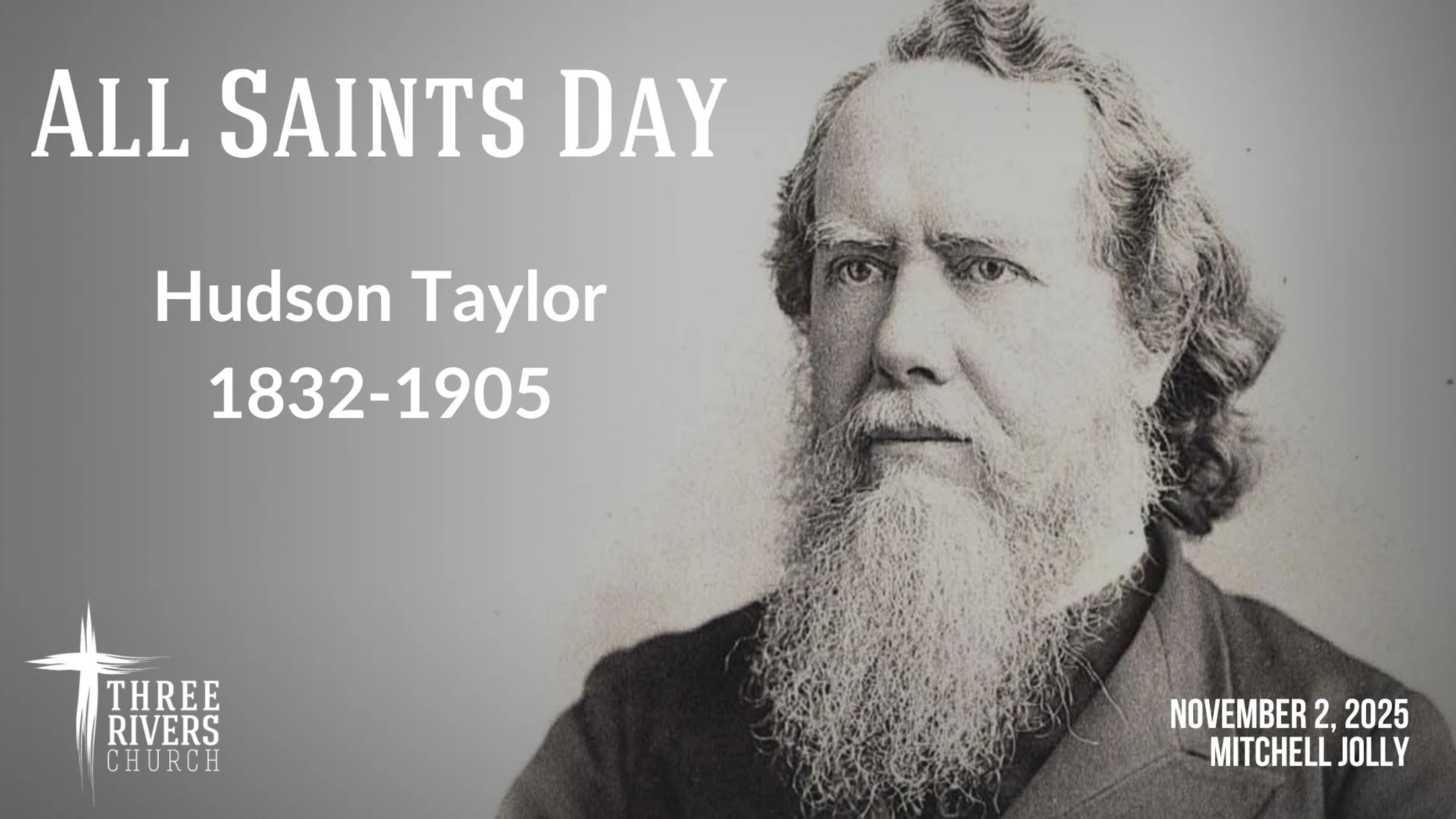
James Hudson Taylor and The Exchanged Life
Sources: Howard and Geraldine Taylor, Hudson Taylor’s Spiritual Secret (Chicago: Moody Press, 1932).
Janet and Geoff Benge, Hudson Taylor, Deep in the Heart of China (Seattle: YWAM Publishing, 1999).
HT = Hudson Taylor
Quotations are taken from Howard and Geraldine Taylor’s work.
Let me begin with an explanation.
I’m not going to give you a full recounting of Hudson Taylor’s life, work, and legacy. I’m going to get you to the coast of China, and a few other details, then leave you to go read my notes and, if you choose, one of the books I read to prepare today’s manuscript for more details.
I’m cutting it short because this manuscript is already long and because I want you to know how Hudson Taylor lived his life, and I want to help you apply it.
It’s not so much the accomplishments of HT. It is the way HT did what he did that is really the story. The world is full of people who do big and great things, but not everyone does their labor like HT and his mentor George Muller.
This one was a challenge in my soul.
Maybe that challenge will become evident to you as we transition to the application.
Born: May 21, 1832, in Barnsley, Yorkshire England.
Died: June 3, 1905, in Changsha, Hunan.
HT founded the China Inland Mission which is still alive and well and known as OMF (Overseas Missionary Fellowship) today. The name was changed in 1964.
From his childhood he would go on to be trained in medicine and would sail for China to serve medically and preach the good news.
Sickness and hardship marked his early years in China, but so did a growing conviction about dependence on God for the work and learning new strategies for making disciples. This conviction about dependence on God began while he was in England and influenced by a mentor named George Muller and one of my favorite Baptists, Charles Spurgeon.
Out of these convictions HT founded the China Inland Mission and modeled faith-based mission support in order to send missionaries inland to provinces where no Protestant witness to the good news had yet to go.
His life was marked by practical organization and preparation, relentless evangelism, and life shaped by what he called “the exchanged life”, a life lived by continual, absolute dependence on Christ rather than on self-effort. This is what I really want to get to and focus on.
HT practiced like he intended to play. What I mean by that is that HT lived like God had called him to live by faith in the now not at some point later. To say it another way, HT lived an integrated life where his trust in the Lord and his actions matched, and it reads today like a story in the Bible. He tried to obey the Lord like he read and understood the Lord wanted all people to live.
Brief Summary.
“Bear not a single care thyself, one is too much for thee; The work is mine, and mine alone; Thy work – to rest in me.” – Hudson Taylor
HT would become and husband, father, and he had plenty of responsibilities. He was not a man of great physical stature and had plenty of limitations, yet his strength and effectiveness were rooted in what he called “the exchanged life”. “I no longer live, but Christ lives in me.”
HT worked at a bank at age 16 and exercised great responsibility as a young man. This was customary for most young men in the 1800’s.
He worked hard, and he would become a proficient physician. “Above all, he put to the test the promises of God and proved it possible to live a consistent spiritual life on the highest plane.” p. 16
Gospel work in China opened, and HT had a deep sense of conviction and call to China.
HT learned that he could draw on the Lord’s fathomless wealth “for every need, temporal or spiritual.” p. 16
He would say one of his goals was to “move men by God through prayer”.
Where did this kind of Christian living come from?
A Saving Encounter with the Lord.
HT’s salvation is a glorious account of the providence of the Lord.
HT’s father would read the Bible to his family in the mornings at breakfast before he began his day’s medical work and practice of pharmacology.
HT would listen but was bored and frustrated by the Bible. This boredom and frustration were stemming from his interactions at his work in the bank.
HT's co-workers at the bank were avid antagonists of the good news, and their rejection of Jesus was rubbing off on him, and their doubts were becoming his doubts.
As these doubts were raging and his own antagonism toward the gospel increased, he began experiencing eye pain. His father asked him to hang around after breakfast and their morning Bible reading before going to work so he could examine HT’s eyes.
After the examination, HT’s father determined that his eyes were suffering from irritation due to the gas lamps at the bank, and his eyesight was in danger. The only cure was rest and no exposure to the environment that was causing the problem.
HT hated that he would have to be home in recovery because he would be bored. While at home recovering, he would pretend to be busy so his 8-year-old sister wouldn’t bother him about playing dolls with her or be asked by his father or mother to do some tasks he didn’t want to do.
His mother went to visit her sister for a few weeks during this time, and HT decided to try and keep himself occupied by reading so his little sister wouldn’t bother him.
One day while away visiting her sister, while HT was at home keeping himself busy and recovering, his mother was moved by the Lord to pray for HT’s salvation. She spent the entire afternoon in prayer for the Lord to save her son, believing the Spirit’s prompting was a call to ask him for her son’s salvation.
While she was praying some 45 miles away, HT grabbed a gospel booklet to read in order to occupy himself. He knew how these gospel booklets worked. It would have an exciting story that would suck the reader into the narrative then spring the good news on the reader and invite them to follow Jesus.
He decided he would only read the exciting story and put the booklet away. However, he was so caught up in the story that before he knew it, he had read the whole thing including the good news presentation.
He read about Jesus’ “finished work”. What he could not escape that lodged in his mind was that Jesus’ work on the cross, his burial, resurrection, and ascension was a completed work that was FINISHED. He could not put that thought away. He thought on it and began to reason that if Jesus’ work was finished then there was nothing, he or anyone could do to add to it.
HT believed this incredibly good news and was instantly changed. HT immediately felt this relief in his soul and experienced a profound change with the gift of, in his words, “abundant new life”. He couldn’t wait to tell his mother.
She arrived home to HT rushing outside to greet her and to share his news of his belief in the Lord Jesus. She told HT she already knew because the Spirit has prompted her to pray for him and given her faith he was going to receive the good news.
This experience of God’s providence immediately deepened his trust in the Lord and stirred in him a deep longing for other people’s salvation and their enjoyment of the closeness and availability of the Lord for them like he was experiencing.
As HT grew in his faith and participated in the evangelism strategies of his day, he would stress that he was not merely concerned for “social service”. Many in his day did good work that they referred to as “social service” but would neglect the preaching of the good news. Not much different than many of us evangelicals today.
Although HT would never neglect people’s temporal needs, he was concerned for their “soul’s salvation” too, just like Jesus told his people about. “Heal and then say to them the kingdom of God has come near to you”.
This desire for people to know the Lord like that drove his social service and gospel preaching effort.
As HT grew in his faith, he recognized that other Christians didn’t necessarily have that kind of love for the closeness with and love toward God. He observed in his relationships with his fellow Christians that this kind of coldness of relationship with God was connected to the “neglect of prayer and feeding on God’s word.” p. 20 HT was 18 years old at this point. One year into his life in Christ.
A Growing Faith.
HT was trying to make sense of his faith in obedience to God’s word.
He worked as a clerk in a bank, he worked as an assistant in his father’s business, and he had to navigate temptations like any young man. He had a cousin come live with him as a roommate who he described as “lively”, and HT had to wrestle to keep his priorities in line. He was tempted to step outside of the boundaries God set for his flourishing.
“The soul that is starved cannot rejoice in the Lord” p. 22, he learned. So, HT had to learn to feed his soul. HT fed his soul on prayer and the study of God’s word.
As he pursued his joy in Christ. HT was aware of and enjoyed the Lord’s presence in prayer and in the Scriptures. He wanted to always have that joy.
As he grew in his faith and working that faith out, missionaries to China from England were coming back home and telling stories of their work with the Chinese. As he sought the Lord for the continual joy of his presence, HT began to have a conviction that he was called to China like these returning missionaries.
In fact, according to HT he heard “as if a voice had spoken, the word came in the silence, go for me to China.” p. 23
So, HT committed himself to begin preparing to go to China. Just like that.
How did he prepare to go to China?
HT exchanged his feather mattress for a hard mattress and began limiting his diet to subdue his appetite for certain foods.
In his denominational tradition, they conducted two Sunday worship services. HT gave up the evening gathering so that he could visit the poorest parts of town, distribute tracts (these were small pamphlets with the gospel printed in them like the one he read and believed the gospel through), and invite people to meetings he would hold in a borrowed cottage to hear more about the good news.
HT wanted to learn Chinese, but he could not afford a Chinese grammar or dictionary. He had secured a copy of the gospel of Luke in Chinese, and by “comparing brief verses with their equivalent in English, he found out the meaning of more than six hundred (Chinese) characters. These he learned and made into a dictionary of his own.” p. 24
HT, because of working with his father’s business, began to study medicine. He would become a doctor eventually. In the meantime, he began working for another doctor, Dr. Hardey, who paid him a sufficient salary for a comfortable life, and he paid him quarterly.
Rather than spend his income on a comfortable life, HT moved to one of the poorest parts of town, rented a small room, and began to serve his neighborhood in obedience to the call to serve and preach the gospel and to prepare himself for the medical work in China. He continued to hold meetings to preach the good news.
To continue preparing himself for moving to China, HT spent 2/3 of his income on his gospel work and lived on 1/3. Earlier, when I mentioned HT limited his diet, he learned to live on oatmeal and rice, which would be what he would most likely have available in China.
HT invested himself in growing in his personal character and disciplines to work out the call of God on his life. He would say, “One cannot obtain a Christlike character for nothing; one cannot do Christlike work save at a great price.” p. 27 HT’s chosen life in preparation for China would cost him, and it was a price he was willing to pay. His future bride would call off their relationship because her father would not allow her to live the life he was living (the father of the bride had significant say in who and how the bride marries), and she personally did not feel fitted for such a life of challenge. She didn’t want the life he could offer in China.
The temptation would come. He could abandon the potential work in China and his hard life and win her back and have a nice life for themselves while doing gospel ministry in England. That doesn’t sound too bad.
He grieved the loss of this relationship, yet while he grieved, he experienced the joy of the Lord that brought him to recover and grow in the faith that he must continue in the work the Lord had called him to and not turn back to some other gospel ministry even if it was gospel ministry. God had clearly put it in his heart to go preach in China, and to China he had to go.
He would go on to say that he had never made a sacrifice because the Lord’s compensation for his sacrifice was a deeper satisfaction in the Lord.
HT was determined to exercise his spiritual muscles. He would write:
“When I get out to China, I shall have no claim on anyone for anything. My only claim will be on God. How important to learn, before leaving England, to move man, through God, by prayer alone.” p. 33
He exercised this spiritual muscle in a very tangible way. His employer, Dr. Hardey, asked HT to remind him when his salary was due. So, in order to exercise that spiritual muscle, HT determined to NOT remind Dr. Hardey directly about his salary.
HT would ask God to bring the necessary recollection to Dr. Hardey about his salary.
With this commitment he would grow in prayer and faith by having God remind Dr. Hardey in response to his prayer because God would be the only One he could ultimately depend on in China. When his salary was due on one particular occasion, HT simply asked the Lord to remind Dr. Hardey. Remember, HT had to budget his income to last 3 months.
Days went on and Dr. Hardey, due to extreme busyness simply forgetting, he didn’t pay HT. Finances started to get tight, and yet HT kept asking the Lord to remind Dr. Hardey about his salary.
HT would be perfectly within all good and right to remind Dr. Hardey about his salary. Afterall, that is what Dr. Hardey asked HT to do.
HT would not remind Dr. Hardey. If he was going to live by faith in China, he would have to practice living by faith in England.
And let me just say right here that living like this in England is how he should have been living whether he was going to China or not.
Don’t miss the point right here for an early application: How HT lived in preparation for China is how all of us should learn to live by faith right where we are. And this is not foolish living. HT was not throwing caution to the wind and acting a fool. He was making preparation because he knew it would be hard. And God can be trusted to take him at his word.
Regardless of what hard thing may or may not be on the horizon, learning to live by faith like the Bible teaches us is just how we are supposed to live whether we go to China, India, or Kroger.
While waiting on the Lord to answer his prayer for Dr. Hardey to pay him, HT was invited to minister to a poor Irish family by the father of that family. This father attended one of HT’s ministry and gospel preaching meetings at the borrowed cottage. HT reluctantly went as it was late in the evening and rainy. He was tired. HT also observed that this family was very poor, and HT was financially down to his last coin, and he could already sense that his faith was going to be challenged. HT went.
As they entered the man’s home, very poor residence, HT was met by malnourished children, a wife who had recently given birth and was nearly dead from bleeding. HT was asked by the father to pray for the family, which he did. The man did not ask for money. HT sensed what he feared in the beginning, Lord’s prompting to give his last coin which he had in his pocket right then. HT began to reason to himself about his due rent which would be most of that last coin. HT began to reason with God about his own already meager food rations as he spent 2/3 of his income on the medical and evangelistic work. All this reasoning with God going on in the moment when Dr. Hardey was late in paying him and God had not prompted Dr. Hardey to pay up. Why would God be asking HT to give away his last bit of money when he had not answered his prayer for Dr. Hardey to pay him?
HT decided to trust the Lord, gave the coin of his own volition, ministered by praying and doing some “doctoring”, and he went home. No miracle check or cash was waiting on him when he arrived at his humble room.
HT continued to ask the Lord to remind Dr. Hardey about his salary.
Later that week he was working late when Dr. Hardey realized he had not paid HT. Dr. Hardey commented that he had just made the deposit and did not have the cash, or he would pay him right there, and didn’t say more about it. HT was disappointed and kept working to finish the necessary tasks for the day that had gone late into the evening, and he kept praying.
A few moments later, well past business hours, someone came knocking at Dr. Hardey’s business door. Dr. Hardey opened the door, and it was a wealthy patient who realized he had not paid his bill and brought the payment.
Dr. Hardey gave the cash from that payment to HT and brought the rest of his due salary the next day.
Dr. Hardey also had some news the next day as he returned from the bank to get HT’s remaining salary. As Dr. Hardey was returning from the bank, he inadvertently ran into an Irishman who knew HT worked for Dr. Hardey and asked that Dr. Hardey let HT know his wife he had prayed for was healed by his prayer and the family was doing well and recovering.
HT was learning through such experiences that God can be trusted to move men and circumstances through praying in faith. God could be trusted completely.
Faith tried and strengthened
When HT arrived in China March 1, 1854, he was met with civil war, harsh circumstances, the persecution of foreigners outside of the coastal treaty cities, and the different climate.
HT was expecting another medical partner, Dr. and Mrs. Parker with their child born at sea, so he set out serving medically, sharing the good news, and looking for a place for he and his team members to lodge.
He had little money, like everyone serving in China. But his chosen agency, the Chinese Evangelization Society, was struggling to keep up their end of the partnership. HT had to find a place to live, feed himself, survive, and would serve for his arriving friends to live and set up shop.
HT found a place that was rough and truly in the line of fire of the civil war. He was constantly subjected to the horrors of the war.
The wounded would be brought to him for care, and prisoners of war would be drug through and not allowed to be cared for on their way to beheading.
This house was eventually in such danger he had to abandon it for a smaller place on the property of the London Missionary Society’s property and prepared for his teammate’s arrival.
HT was confined to the coast, and in his case, Shanghai. Why?
Let me set a little historical context for why HT was limited to Shanghai and the coast rather than inland China.
In the early 19th century, Britain had growing commercial interests in China, primarily through the British East India Company. China, under the Qing Dynasty, saw itself as the “Middle Kingdom”, self-sufficient, and culturally superior. China only allowed trade under strict regulation.
Foreign trade was restricted to the port of Canton (Guangzhou).
Western merchants could not travel inland or interact freely with Chinese citizens.
Trade had to go through a guild of Chinese merchants known as the Cohong, supervised by imperial officials.
Foreigners could not learn the Chinese language, bring in religious material, or reside permanently in China.
This restrictive system frustrated the British, whose appetite for Chinese tea, silk, and porcelain was enormous, but China didn’t want much from Britain. This stance created a massive trade imbalance.
To fight this imbalance, Britain began to export opium from its colony in India to China.
The British East India Company cultivated this opium and sold it through private merchants into China. This was a despicable practice.
By the early 1800s, millions of Chinese were addicted to opium, causing devastating social, economic, and moral consequences.
Silver started flowing out of China as the Chinese were paying for their opium addiction. This movement of currency reversed the trade deficit, which greatly benefited British merchants.
The Chinese government saw opium as a national crisis, so in 1839, the Daoguang Emperor sent Commissioner Lin Zexu to Canton to enforce a ban on the opium trade.
Lin confiscated and destroyed over 20,000 chests of opium (more than a million pounds of the drug). Britain responded militarily and that led to the First Opium War (1839–1842).
China was defeated, and the Treaty of Nanking became the first of the so-called “unequal treaties.”
It opened five “Treaty Ports” for trade and residence: Canton (Guangzhou), Amoy (Xiamen), Fuzhou, Ningbo, and Shanghai.
This treaty ceded Hong Kong to Britain.
This treaty granted extraterritorial rights for British citizens; thus, they were not subject to Chinese law.
This treaty fixed tariffs favorable to Britain.
The results of this treaty were that it marked the end of China’s isolation, gave British merchants more access to China’s coast, and granted missionaries with British protection access to these treaty ports, but not inland China.
This treaty also made many Chinese hostile to the British and thus anyone wearing British clothing could become a target for violence regardless of their intent for good or harm.
HT would discover later that ditching British clothing for Chinese clothing would open doors for the gospel.
A Friend and Mentor.
As HT worked to secure housing, and he eventually did, he would make trips inland from Shanghai. During this first early period, he made 10 different trips inland via various river routes. He would share gospel tracts with people, and he would serve their medical needs as a doctor.
As mentioned above, one of HT’s observations during this time was that British clothing was not suited for life in China and hindered their work.
Their British style of clothes would distract people from what they were teaching and could often make them unnecessary targets. Afterall, it was the British that fought with them and introduced them to opium. It was not to their advantage to take their British customs into China and expect everything to just be fine.
HT decided that he would adopt the dress of the Chinese, and by doing this, HT gained deeper access into homes and inland locations.
On one trip to Tsungming, HT found great favor, and several young men believed the good news, and HT began discipling them in the faith.
As he did this work, medical rivals started making an issue of his presence. This tension may have been because HT did his medical work for free and his labor was limiting their income.
Either way, he was called to the British consulate and encouraged to go back to Shanghai because the British, through a treaty, only had access to Shanghai and not the interior of China.
HT had to leave his young disciples, and they didn’t know how to carry on in their newfound faith in Jesus. So, HT told them, “...you will worship in your own home. Shut your shop on Sunday, for God is here whether I am or not. Gather your neighbors to hear the Gospel.” p. 71
Having to leave his new disciples was hard, but HT trusted the Lord’s providence in not allowing him to stay. The Lord would bless that work. It would be the first fruits of later work.
Upon his return, the Lord would send HT a co-laborer named William Burns who had been instrumental in the revival of 1839 in Canada and Scotland. Burns found that HT’s dressing in the native clothing was more effective and adopted that strategy as his own, and the two become fast friends and partners in the work.
The adoption of native dress would become a hallmark of the modern missions movement and is still in practice today where gospel work is tenuous. When in Afghanistan, we wore the shalwar chamis. You can see my Afghan clothes hanging in my office. That strategy kept me alive on the Afghan / Pakistan border in 2004. Thank you, HT, for that strategic initiative!
HT and William Burns would work together for 7 months. Mr. Burns became a spiritual father to HT, and HT grew deeply under the influence of Mr. Burns’ friendship.
They were able to establish a great work to the south on the coast at Swatow, and Mr. Burns, seeking to help establish a hospital, sent HT back to Shanghai to retrieve the remainder of his medical supplies only to find out upon return his things had been destroyed by fire, and soon received word that Mr. Burns had been arrested and send away to a Canton. Both HT and Mr. Burns were forbidden from returning to Swatow. This was a painful loss, yet instrumental in what would become HT’s life work.
HT would go on to great success in his medical work in China, disciple making in the inland work, recruiting workers to the labor, and establishing a long-term work still ongoing today.
A Wife!
Hudson Taylor's wife was Maria Jane Dyer, a fellow missionary born on January 16, 1837, in Malacca (then part of the British Straits Settlements) to missionary parents serving with the London Missionary Society.
They met in October 1856 in Ningpo (modern-day Ningbo), China, shortly after Hudson relocated there from Swatow following the challenges to his and Mr. Burn’s missionary work.
Maria, who had been orphaned young as a missionary family and raised partly in England, had returned to China in 1852 to work at a girls' school that was operated by Mary Ann Aldersey, where she educated and evangelized in the local Ningbo dialect. Hudson and Maria connected over their shared commitment to missionary service, holiness, and a deep faith in God. HT’s life of faith set him apart from other suitors in her eyes.
Their courtship began in 1857 when HT proposed, but HT faced strong opposition from Mrs. Aldersey, who viewed Hudson as unsuitable due to his independent missionary style and choice to adopt Chinese clothing and customs, which offended some missionaries.
Maria initially declined HT’s proposal under pressure from Mrs. Aldersley.
Aldersey blocked them from meeting for months, but Maria's official guardians (her aunt and uncle in England) eventually gave their blessing for her to accept HT’s proposal.
Hudson offered Maria an opportunity to say “no” before they got married, warning of the perils ahead in their missionary life. But Maria affirmed her trust in God, drawing from her own experiences as an orphan relying on divine provision. She loved HT.
They married on January 20, 1858 (some sources note January 23), at the Presbyterian Compound in Ningbo, just days after Maria turned 21.
Their marriage was marked by mutual support in their work. Maria became a key partner in founding and growing the China Inland Mission, training single women missionaries and assisting Hudson in evangelism, education, and medical efforts despite ongoing hardships like persecution, illness, and financial strain.
Maria would pass on to be with the Lord in July of 1870, and he would later remarry to Jennie Faulding in November of 1871. She was a veteran missionary of China Inland Mission.
Over his life, HT would make 11 voyages from England to China in his expansive, organizationally unique, culturally unique, and extensive missionary work.
So, how did HT manage this life and find such effective and ongoing work?
Application 1.0 “The Exchanged Life”.
The title of the biography his son and daughter-in-law wrote is called “Hudson Taylor’s Spiritual Secret”.
Often how HT approached the working out of his faith in Jesus is called HT’s “Spiritual Secret”. What people mean by that is what HT himself called “the exchanged life”.
HT believed, like his mentor George Muller back in England, that this kind of living was available to all who would simply take God at his word.
How can we summarize what he called “The Exchanged Life”?
There are five components that make up the “exchanged life” and all five feed on each other, and they are hard-wired together by the first one.
1. Jesus Lives in the Follower of Jesus: Galatians 2:20 (ESV) 20 “I have been crucified with Christ. It is no longer I who live, but Christ who lives in me. And the life I now live in the flesh I live by faith in the Son of God, who loved me and gave himself for me.”
The core of the exchanged life is the reality that it is "no longer me, but Christ" who lives inside of me. This truth replaces my weakness with Jesus’ life, power, and sufficiency for daily living and service.
2. Resting in Jesus’ Faithfulness Instead of Striving to Earn Jesus’ Faithfulness: 2 Timothy 2:11-13 (ESV) 11 “The saying is trustworthy, for: If we have died with him, we will also live with him; 12 if we endure, we will also reign with him; if we deny him, he also will deny us; 13 if we are faithless, he remains faithful—for he cannot deny himself.”
By this HT does not mean our saving faith. He’s talking about our growth in faith. HT believed that the exchanged life involves stopping our personal effort alone to achieve holiness.
HT is clearly not opposed to our necessary effort. He’s not talking about passively doing nothing.
Rather, in the exchanged life we put all our weight on Jesus who remains faithful even when our faith is weak. To say it another way, we completely trust Jesus to be our righteousness and uphold our faith because out best effort alone is not enough, so we gladly accept our weaknesses because God’s strength for us in his love for us is enough.
This placing our full weight on the support of Jesus leads to deep transformation and victory over sin. Again, this does not negate our necessary striving, but it does put our necessary striving in its place. We strive not to earn God’s faithfulness to us. We strive because his faithfulness is a gift given to only be received. So that our striving itself is a gift that we then exercise in joy not in gritting our teeth.
3. Union with Christ Like a Branch Connected to the Vine: John 15:5 (ESV) 5 “I am the vine; you are the branches. Whoever abides in me and I in him, he it is that bears much fruit, for apart from me you can do nothing.”
HT emphasized what the Bible teaches, that followers of Jesus are united with Christ like a branch is united to a vine. By this union the branch draws life, strength, and resources directly from Jesus rather than trying to produce life, strength, and resources independently.
4. Access to Jesus’ Resources Through Our Union with Christ: 1 John 5:14-15 (ESV) 14 “And this is the confidence that we have toward him, that if we ask anything according to his will he hears us. 15 And if we know that he hears us in whatever we ask, we know that we have the requests that we have asked of him.”
Because we are united to Jesus, HT believed that in our union with Jesus, intimately connected with Jesus, followers of Jesus share in his resources. This truth should remove anxiety about provision or lack of provision and enable confident prayer. Thus, we can pray confidently since what is asked in his name according to God's will is granted.
This is prayer in faith. It’s not presuming or demanding. It’s knowing his will through our union with Jesus and then praying that knowledge of his will, and like Abraham in Romans 4, being fully convinced God is able thus increasing my hope.
Now, often God’s will is my suffering for greater purposes than my temporal comfort, and I admit I will often plug up my ears when I know his will is unpleasant and falsely prophesy to myself things not true.
And if you go dig around in Romans 4, you will note that Abraham knew God’s will, but he still didn’t presume. His hope was not in God doing what he asked, but in God’s ability to do it. So, he took peaceful hope.
Therefore, we have access to Jesus’ recourses not in presumption but in hope.
So, our union leads us to not act like we are owed anything but to have the opportunity to know God’s purposes, trust his good, take hope, and believe in joy and peace.
5. Abiding in Christ for Joy and Abundant Life: John 7:37-39 (ESV) 37 “On the last day of the feast, the great day, Jesus stood up and cried out, ‘If anyone thirsts, let him come to me and drink. 38 Whoever believes in me, as the Scripture has said, Out of his heart will flow rivers of living water.’” 39 Now this he said about the Spirit, whom those who believed in him were to receive, ...
Hebrews 13:5-6 (ESV) 5 “Keep your life free from love of money, and be content with what you have, for he has said, ‘I will never leave you nor forsake you.’ 6 So we can confidently say, ‘The Lord is my helper; I will not fear; what can man do to me?’”
Matthew 11:29-30 (ESV) Take my yoke upon you, and learn from me, for I am gentle and lowly in heart, and you will find rest for your souls. 30 For my yoke is easy, and my burden is light.”
HT believed the exchanged life meant we can abide in Jesus because we have his constant presence. By living in his constant presence, we get rest, joy, and an outpouring of life in abundance that will satisfy our human thirsts and empower God’s mission.
Application 2.0
By telling you this I feel like I’m burdening you with something that is really nothing new biblically. Maybe you understood all these already. Maybe you never put them together, and by putting them together, you get it.
Maybe for some of us this feels unattainable and thus a little defeating and disappointing.
So much of what produced HT’s life and ministry feels like “preacher speak”.
It’s true we are to abide in Christ. But many of us just don’t not because we don’t want to, but because we don’t know how. Maybe we don’t because there is a barrier in our understanding that hinders our access to such intangible things the Bible tells us is reality.
How do we do something with the exchanged life? How do we tap into these realities?
One of the reasons we do these bio sermons is to give us testimony that life like this in Christ is possible in the best and worst of circumstances.
1. Identify and then kill any naturalistic lens you have in your worldview that leads you to believe that what you see is all there is.
As you read the Bible, don’t de-mythologize what you read. Don’t let “scholars” talk you out of the Bible’s supernatural worldview.
Read the Bible, let it say what it says, then let that correct what you thought before you read it.
2. Kill the idea that God, in heaven, is far away from you.
Somehow, we have a belief that God is far away and that “heaven” is somewhere we have to time travel to and thus we live disconnected from what is right here.
Listen to the Lord through Jeremiah: Jeremiah 23:23-24 (ESV) 23 “Am I a God at hand, declares the LORD, and not a God far away? 24 Can a man hide himself in secret places so that I cannot see him? declares the LORD. Do I not fill heaven and earth? declares the LORD.
Listen to what Paul told the pagans on Mars Hill in Athens: Acts 17:26-28 (ESV) 26 And he made from one man every nation of mankind to live on all the face of the earth, having determined allotted periods and the boundaries of their dwelling place, 27 that they should seek God, and perhaps feel their way toward him and find him. Yet he is actually not far from each one of us, 28 for “‘In him we live and move and have our being’; as even some of your own poets have said, “‘For we are indeed his offspring.’
When you go back to the garden in Genesis 3, God’s presence is not far from us. One of the results of the fall we see is God placing cherubim and swords cutting mankind off from Eden. I believe this is God separating the earthly and the cosmic dimensions. Sin cut us off form experiencing God’s ongoing redemptive relational presence. What John records in Revelation 21 is the rejoining of the earthly and cosmic because of the full breaking in of the kingdom of God.
Paul actually quotes a Cretan poet to make his Holy Spirit inspired point to the worshipers of the Greek pantheon on Mars Hill that God is not far off.
When a person repents and believes in Jesus, the kingdom of God begins to break in, and opens what was closed off in Genesis 3.
If God is not far from the pagan for them to turn to him and believe, how much closer is the Lord to us who believe?
We have the indwelling Holy Spirit.
If we are going to live the exchanged life, we have to believe the Lord is near, accessible, and desires to help us and be with us.
How do we access him?
3. Learn to still your body until you can still your mind so you can begin to discern the difference between your thoughts and thoughts that come from outside of you to influence you.
HT did not have the disadvantage of what we call technological advancement in the form of digital distractions. Life was slower, and information was absorbed at a slower pace.
Things have shifted with the speed of information coming at humans. As a result, something has shifted between Gen X and today. Our baseline as Gen X was boredom.
Subsequent generation’s baseline has become anxiety. We know neurologically that people whose brains are in an anxious state are not fully connected to every part of their brain, and if we are not fully connected in our physical nerve center we are not connecting clearly to and with all our unseen parts nor with Holy Spirit who is unseen.
It won’t be pharmaceuticals that will fix that. It will be us taking back the tools of central nervous system self-control. I’m not doctor, but I’m not stupid either. I’ve lived both, and one nearly killed me, and one changed my life. You can get angry at me saying that if you like, but you can’t have my testimony of what the Spirit did for me by helping me dial into his presence.
When you exercise the Spirit fruit of self-control, and you still your mind, you will begin to hear like you didn’t know you could hear. When you learn to fast, your antennae for the unseen world will get more sensitive.
You will begin to be able to detect first, second, and third person in your thoughts. When that happens, you’ll be able to hear the difference in your self-talk, the Holy Spirit, other people’s negative words to you and at you, the voice of false prophets, and the voices of the forces of evil.
When you do that, you are ready to interact with God in richer ways, you are able to obey in ways you never have, and you will begin to enjoy the fellowship of the Son of God in the union you already have.
4. Acknowledge the Lord’s nearness out loud in prayer and fight to believe it.
We cannot neglect prayer, actually conversing with the Lord, and live the exchanged life.
And pray out loud when it’s appropriate.
Notice that the Lord’s model prayer begins by acknowledging the Father’s location in the realm of heaven, which is not far away.
So, if you merely learn prayer by praying like Jesus taught us, and you understand that prayer with the whole Bible as your interpretive framework, you are beginning prayer by acknowledging the Father’s nearness and your access to him.
There is no evidence the enemy can hear your thoughts, so you need to fight in prayer out loud.
5. Acknowledge you are not wrestling merely against flesh and blood, but forces of evil arrayed against you and us together.
Don’t believe that when you attempt to live the exchanged life things will be easy. They won’t.
When you begin to do these things, you will hear the Lord, his word will begin to connect in ways you have not yet begun to enjoy, you will get comfortable waiting on the Lord rather than making things happen, you will begin to no longer fear man or be moved by man’s raging at you, and you will begin to tap into the outskirts of the exchanged life.